News
Meta's Muse Glimmer 30B Optimized for AMD Ryzen AI Systems
Meta's Muse Glimmer 30B, a 30B parameter open AI model, now runs efficiently on AMD hardware, enabling powerful local AI applications.
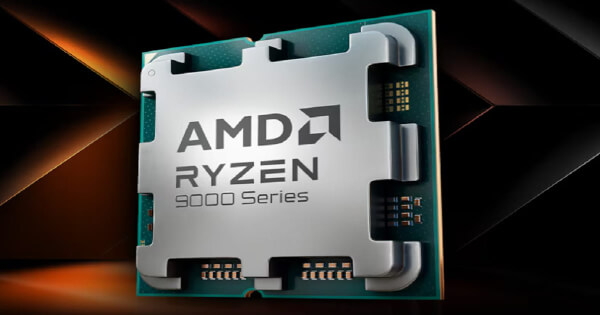
Meta's latest AI model, Muse Glimmer 30B, is setting a new standard for local inference, and AMD hardware is positioned as the prime platform for running it. This 30-billion-parameter dense model, released under the Apache 2.0 license, is optimized for agentic and coding workloads, giving developers a robust tool for local AI applications without relying on cloud infrastructure.
The model is specifically designed to leverage AMD's Ryzen™ AI Max+ processors and Radeon™ AI PRO R9700 graphics cards. Benchmarks indicate impressive performance: up to 24 tokens per second on a Ryzen AI Max+ 395 processor and up to 53 tokens per second on a single Radeon AI PRO R9700 GPU. These figures come with dFlash enabled and were tested using open frameworks like llama.cpp, further highlighting the versatility of the system.
Muse Glimmer's open-weight architecture supports local workflows, a critical advantage for privacy-sensitive applications. Unlike cloud-first AI solutions that can introduce latency and security risks, running the model locally keeps data and operations under direct control. This aligns with the growing trend of decentralized AI adoption, where developers prioritize on-device solutions for faster, safer, and more cost-efficient applications. Early reports from the Unsloth community suggest the model requires about 18GB of RAM for inference, making it accessible for high-end consumer PCs and workstations.
Why Muse Glimmer 30B Matters
The 30B model is a major leap for agentic AI. It’s designed to handle complex, multi-step workflows that demand context retention, tool usage, and adaptive decision-making. With support for 128K+ context, Muse Glimmer could power applications like coding assistants, workflow automation, and private AI tools. Its training also emphasizes safety, with mechanisms to resist oversharing and prompt injection attacks.
Developers can get started with Meta's LM Studio for easy model deployment on AMD hardware. Systems with 32GB+ Variable Graphics Memory (VGM) or VRAM are recommended, allowing users to run the model in minutes. For integration into existing applications, the Lemonade platform offers a lightweight API that simplifies deployment while keeping data local. This embeddable binary approach opens the door to a variety of real-world use cases, from research tools to offline assistants.
Open-Source and Commercial Flexibility
Muse Glimmer's Apache 2.0 licensing gives developers extensive freedom. They can modify, redistribute, and integrate the model into commercial applications without restrictive terms. Community contributors have already released GGUF quantized versions on Hugging Face, enabling more efficient inference on a wide range of hardware.
This release positions Meta as a leader in the push for local AI solutions. By focusing on agentic workloads and prioritizing privacy, Muse Glimmer 30B fills a critical gap in the market. It’s especially relevant as businesses and developers look to transition from cloud-dependent AI to on-device solutions that offer greater control and lower operating costs.
What’s Next?
Muse Glimmer 30B is part of AMD's vision for the "Agentic PC," a platform that moves beyond isolated AI features to host persistent intelligence. With further software optimizations and ecosystem development expected, the performance of Muse Glimmer on AMD hardware will likely improve further. For developers and enterprises seeking to explore the next phase of local AI, this model and its hardware partners represent a compelling starting point.