
Arbitrum Community Pilot: Voting on the Distribution of 25 to 45 Million ARB in Long-Term Incentives
Arbitrum community votes on a pilot program to distribute 25 to 45 million ARB tokens as long-term incentives to protocols on its platform, aiming to enhance ecosystem growth and innovation.
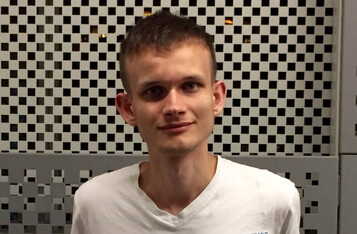
Ethereum co-founder Vitalik Buterin Proposes Signature Reduction
Ethereum co-founder Vitalik Buterin proposes reducing the number of signatures for validators in the PoS system to simplify the system, address technical issues, and enhance network security.

HK Legislative Council Member Advocates for Integrating Senior Economy with Web3
Johnny Ng discussed the senior economy's integration with the internet and Web3's potential to boost content creator earnings at the 2023 World Internet Conference, highlighting Hong Kong's growing interest.

NEAR and Polygon Partner to Launch zkWASM
NEAR Foundation and Polygon Labs are collaborating on zkWASM, a zero-knowledge prover for WASM blockchains, to enhance interoperability with Ethereum and improve scalability and decentralization.
Helium's HNT Token Lists on SwissBorg
The Helium Foundation has listed its HNT token on SwissBorg, expanding the Helium Network's reach to over 700,000 users, promoting decentralization and accessibility.
Scroll Launches zkEVM Mainnet
Scroll unveils its zkEVM mainnet on October 17, enhancing Ethereum’s scalability and developer engagement. Employing zero knowledge proofs, it boosts transaction speeds and reduces costs, promising a near-identical Ethereum experience, without compromising security or decentralization. The launch follows extensive testing, with notable contributions to Ethereum Foundation’s Privacy and Scaling Explorations. The initiative eyes global developer adoption, advancing Ethereum’s Layer 2 solutions.

Celestia's Core Values: Bridging Off-chain Governance with User-centric Network
Mustafa Al-Bassam delineates five core values for Celestia's social layer aimed at enhancing trust-minimization and user-centric network functionalities. These values include the primacy of off-chain governance, user elevation, credible neutrality towards execution environments, economic sustainability, and minimizing overhead and state bloat. The discourse provides a profound insight into Celestia's commitment to fostering a user-driven, trust-minimized blockchain network.

Ethereum Founder Vitalik Buterin Proposes Tweaks to Improve Decentralization and Reduce Consensus Overhead
Vitalik Buterin, the founder of Ethereum, has proposed changes to the network's staking model aimed at improving decentralization and reducing the consensus layer's computational burden. The proposal includes the introduction of a two-tiered staking system involving node operators and delegators. Buterin suggests that these changes could significantly reduce the number of signatures required for consensus, thereby making it easier for more people to participate in the network's validation process.
Solana Co-founder Labels Ethereum 'Bourgeois Digital Tyranny
Solana Labs Co-founder, Anatoly Yakovenko, defended the Solana network's accessibility during a Twitter debate from 1st to 2nd October 2023, responding to criticisms regarding the cost of running nodes. Yakovenko contrasted Solana with Ethereum, advocating for negligible costs in state creation to promote true decentralization, despite rebuttals highlighting Solana's high node operation costs favoring corporations.

Ethereum's Layer 2s Break New Ground in Scalability
Ethereum has seen a 22% rise in value as of September 2023, largely attributed to the emergence of Layer 2 solutions like BASE by Coinbase, which enhance scalability and user affordability on the network. Leading Layer 2 blockchains, Optimism and Arbitrum, have surpassed major Layer 1 blockchains in Total Value Locked, indicating a growing trust and utilization in the Ethereum ecosystem. Despite centralization concerns, the progressive strides in Layer 2 solutions are poised to bolster Ethereum's standing as a dominant smart contract blockchain.