HONG KONG

Why Hong Kong Will Be a Leading Digital Asset Trading Centre in Asia
Reasons why Hong Kong will a leading digital asset trading centre in Asia.

FBI Arrests 2 Hackers for Ransomware and “Crypto-Jacking” Scams, 5 Chinese Suspects Still at Large
The DoJ and the FBI seized two criminals connected to a cybercrime targeting over 100 companies in the US and abroad with ransomware, crypto jacking and more.

Bitcoin Ad in Hong Kong Apple Daily Publication Promotes Bitcoin As Beyond Government Control
In the Hong Kong Apple Daily today, a full-page ad was dedicated to Bitcoin, calling on Hong Kongers to move their wealth beyond the control of “any” government.
Hong Kong SFC Agrees in Principle to License Fidelity Backed OSL Crypto Firm
Hong Kong’s Securities and Futures Commission (SFC) has agreed in principle to license the cryptocurrency firm OSL Digital Securities.

Hong Kong’s National Security Law Triggers Exodus of Wealthy Society’s Capital, Is Gold Being Dumped for Bitcoin?
Hong Kong’s rich and affluent are reportedly moving large amounts of gold out of the major financial hub following Beijing’s imposed national security law. According to well-known Bitcoin bull Max Keiser, Bitcoin is a better way to export your fortune.
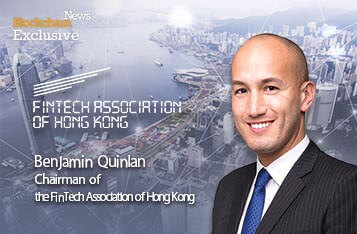
Benjamin Quinlan: New Chairman of FinTech Association of Hong Kong Shares Vision for FTAHK 2.0 and the Future of Asia's FinTech Ecosystem
The FinTech Association of Hong Kong has elected Benjamin Quinlan as Chairman to lead it through the next chapter of its mission to foster the FinTech ecosystem in Hong Kong and Asia.

Will Hong Kong's Status as an International Digital Financial Hub be Affected by the National Security Law?
2020 has been quite a year for Hong Kong, marked by months of political unrest, the emergence of the coronavirus pandemic, and a sweeping new national security law that China imposed on the city. The national security law, unanimously passed by China’s ruling Communist Party, sets up against secession, subversion, terrorism, and collusion with foreign forces to endanger national security.

DLA Piper: Security Tokenization in Hong Kong
Security tokenization is the representation of fractional interests in an asset using blockchain. A security token derives its value from an underlying asset, such as a work of art. This differs from a utility token, which gives a holder the right to use a particular product or service, or a cryptocurrency such as Bitcoin, which has its own value as a currency.

McAfee's Ghostcoin Gets Backing as Payment in Hong Kong
John McAfee's Ghostcoin gets backing for use as a payment coin in Hong Kong across 60 vending machines including Disneyland.

China Leads Pan-Asian Digital Currency Project to Compete with Facebook's Libra
Led by China, four Asian countries are in the early stages of developing a joint digital currency. The currency will help keep the Dollar and Libra in check

Bitcoin Adoption is the Ultimate Protest Against Government and State Abuse of Freedoms
As protests break out across the globe against state and central authorities, are the protesters overlooking their best and most potent weapon in Bitcoin? Bitcoin in essence, was built for protest and could potentially destabilize the central source of power for our governments—control over traditional financial systems.

Hong Kong Fintechs Embrace Blockchain and DLT
Blockchain firms make up nearly 40% of all new Hong Kong FinTech companies launched in 2019.

China Plans to Incorporate Blockchain in Attempt for Hainan to Overtake Hong Kong on International Trade
The Chinese government is planning to make the province of Hainan into a free trade port, focusing on facilitating free trade, investment, and cross-border capital flows. The plan encourages government institutions to use blockchain and other emerging technologies to improve government functions. The government’s plan has mentioned blockchain technology consistently, as it could have the potential to be used in social governance, as well as protecting data systems including intellectual property rights.

Hong Kong Vending Machines Accept Bitcoin Cash not Bitcoin Boasts Roger Ver
Bitcoin Cash (BCH) advocate Roger Ver recently took to Twitter to highlight a Hong Kong vending machine which accepts BCH and Ether as payment options but not Bitcoin. After asking why BCH was preferred over BTC, Ver was accused by popular YouTube Bitcoin influencer Tone Vays and trader Willy Woo of paying for Bitcoin’s omission.

China Passes Civil Code Which Will Allow its Citizens to Inherit Cryptocurrency
At the Thirteenth National People’s Congress held in Beijing China, the parliament passed a new civil code that protects the civil rights of inheritance, marriage, property, personality, and contract infringement. According to Lixin Yang, a professor at Renmin University of China, the civil code states that “When a natural person dies, the legacy is the personal legal property left by she/he.” Personal legal property in this case also means “internet property” including virtual currencies. Chinese citizens will be able to leave their cryptocurrency and virtual assets to their heirs, coming into effect on January 1, 2021.